
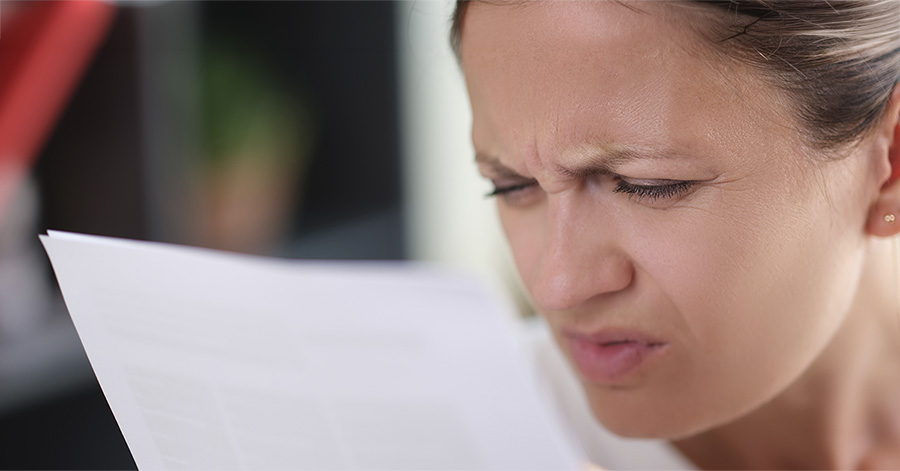
Do you see clearly but still get tired from screens, reading or close-up work? Hidden squint and binocular vision problems can make your eyes work too hard, causing headaches, blurred text and tired eyes.

You may see clearly on the eye chart. But your eyes still get tired. Text starts to blur. Your head begins to ache. The screen feels harder to look at the longer the day goes on. In that case, the problem may not be ordinary visual sharpness. It may be how your eyes work together.
At Optikhuset Stockholm, we do not only check how clearly you see. We also look at how your eyes cooperate, especially during reading, screen use and other close-up work.
What is hidden squint?
Hidden squint means that your eyes have a tendency to point in slightly different directions. It is not always visible from the outside. And most of the time, you still see one single image. That is because your brain and eye muscles compensate. But that compensation can be tiring.
Especially when you read, work at a computer, look at your phone or do other close-up tasks for a longer period of time. That is often when the symptoms appear. Not immediately.
But after a while.
Binocular vision is about eye teamwork
When we talk about binocular vision, we mean how well your two eyes work together. Both eyes need to point at the same spot. They need to focus at the right distance. They need to keep the image stable. And they need to manage this for as long as you need them to.
When this teamwork is not fully stable, your eyes may have to work too hard. You may see clearly for a short time, but still become tired, get headaches or feel that text becomes messy after a while. That is why a standard eye test does not always find the problem.
You may see well at a distance. But still struggle at close range.
Common symptoms of hidden squint and binocular vision problems
The symptoms can be vague. That is why it is easy to think you are just tired, stressed or having trouble concentrating.
Common signs include:
- headaches after reading, screen use or close-up work
- tired, sore or strained eyes
- text becoming blurry, messy or hard to keep still
- difficulty concentrating while reading
- losing your place or needing to reread the same passage
- discomfort in bright light
- closing one eye when tired
- tilting your head or looking slightly sideways
- glasses that feel almost right, but not quite
- difficulty getting used to progressive lenses
- tiredness at the end of the working day
A child may start avoiding reading. An adult may feel that screen work takes more energy than it should. And both may have the same underlying problem: the eyes are working too hard to keep the image together.
Hidden squint is not the same as dyslexia
Hidden squint and binocular vision problems are not dyslexia. But the symptoms can appear in the same situations. When reading. During schoolwork. During focused work in front of a screen. The difference is that the problem is not the reading ability itself. It is about how hard the eyes need to work to keep the image stable.
That is why it can be wise to have your vision examined properly if reading or screens often lead to headaches, tired eyes or blurred text. Especially if the symptoms appear after a while.
Why do the problems often appear during screen use and reading?
When you look into the distance, your eyes are more relaxed. When you read or work at a screen, your eyes need to do several things at the same time. They need to turn inwards toward the same point. They need to focus at the right distance. And they need to keep the image stable while you move your gaze between text, keyboard, phone and surroundings. That takes precision.
When binocular vision is not stable, the work becomes heavier. It can feel as if your eyes never really get to rest. For a short time, it may work well. Then the tiredness comes.
A standard eye test is not always enough
Many eye tests focus on how well you see at a distance. That is important. But it does not tell the whole story. If your symptoms appear during reading, screen use or other close-up work, it is also important to examine how your eyes work together at close range. This includes how the eyes align, how they focus and how long they can keep the work stable. That is often where the explanation is found.
How Optikhuset Stockholm can help
At Optikhuset Stockholm, we make a more detailed assessment of your vision and eye function. We look at visual sharpness, prescription strength and how the eyes work together. When needed, we also assess whether your symptoms may be reduced with the right near correction, prism lenses, vision training or other tailored solutions.
The goal is simple. Your eyes should not have to work harder than necessary. Reading should feel easier. The screen should feel calmer. And everyday life should take less energy.
When should you book an eye examination?
Book an appointment if you often get headaches, tired eyes or blurred text when reading or using screens. Also book an appointment if your glasses do not feel quite right, even though the prescription seems correct. Do not wait until the discomfort becomes part of everyday life. We can help you find out whether your eyes are working together as they should.
Find us
Birger Jarlsgatan 2, Stockholm. Opening hours: Monday to Friday: 10:00 to 18:00. Saturday 11 to 16.
FAQ
What is hidden squint?
Hidden squint means that your eyes have a tendency to point in slightly different directions. It is often not visible from the outside, because the brain and eye muscles compensate so that you still see one single image. But that compensation can become tiring, especially during reading, screen use and other close-up work.
What are binocular vision problems?
Binocular vision problems mean that the eyes do not work together in a fully stable way. Both eyes need to point at the same spot, focus correctly and keep the image steady over time. When this does not work properly, you may get headaches, tired eyes or blurry and messy text.
Can I have hidden squint even if I see clearly?
Yes. That is one reason why the problem can be hard to detect. You may see clearly on the eye chart but still get symptoms when your eyes need to work together for a longer period of time, for example when using a computer, reading or looking at your phone.
What are common symptoms of hidden squint?
Common symptoms include headaches, tired or sore eyes, blurred text, difficulty concentrating, sensitivity to light and glasses that do not feel quite right. Some people close one eye, tilt their head or lose their place when reading.
Is hidden squint the same as dyslexia?
No. Hidden squint and dyslexia are different things. But the symptoms can appear in similar situations, such as reading and schoolwork. That is why it can be worth examining how the eyes work together if reading often leads to tiredness, headaches or blurred text.
Can hidden squint be treated?
In many cases, the symptoms can be reduced. The solution may involve the right prescription, a special near correction, prism lenses, vision training or other tailored adjustments. The right treatment depends on how your eyes work together and what symptoms you have.